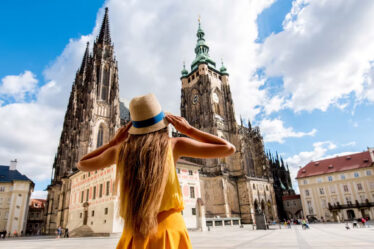
European cathedrals stand as some of the most powerful symbols of history, belief, and artistic ambition ever created. Rising above medieval towns and modern cities alike, these monumental structures tell stories carved in stone, glass, and light. They are not only places of worship but also cultural landmarks that reflect centuries of craftsmanship, political change, and spiritual devotion. From soaring Gothic spires to harmonious Romanesque forms, european cathedrals reveal how architecture became a language through which Europe expressed its deepest values.
The Historical Roots of Cathedral Building in Europe
The tradition of cathedral construction in Europe began in late antiquity and flourished throughout the Middle Ages. Early Christian communities adapted Roman basilicas for worship, laying the foundation for what would become a uniquely European architectural evolution. As Christianity spread, bishops required central churches that symbolized their authority, giving rise to the first major european cathedrals. These buildings were designed to inspire awe, reinforce faith, and serve as civic centers where religious and social life intersected.
By the 11th and 12th centuries, cathedral building became a competitive expression of wealth and power among cities. Towns invested generations of labor into projects that often took over a century to complete. This long timeline allowed styles to evolve within a single structure, making many european cathedrals layered records of architectural history rather than uniform designs.
Romanesque Foundations: Strength and Stability
Romanesque cathedrals dominated Europe between the 10th and early 12th centuries. Characterized by thick stone walls, rounded arches, and relatively small windows, these structures conveyed a sense of permanence and protection. The design reflected a world still shaped by uncertainty, where churches also functioned as places of refuge.
In southern Europe especially, roman-inspired symmetry and solidity defined early european cathedrals. Interiors were often dim, encouraging contemplation and emphasizing the mystery of faith. Despite their heavy appearance, Romanesque cathedrals introduced innovations such as barrel vaults and structured floor plans that would later support more ambitious architectural experiments.
Gothic Cathedrals: Light, Height, and Heavenly Ambition
The Gothic movement transformed cathedral architecture beginning in 12th-century France. Builders sought to reach toward the heavens, replacing thick walls with skeletal frameworks supported by flying buttresses. This allowed for taller structures and expansive stained-glass windows that flooded interiors with colored light.
Some of the most iconic european cathedrals belong to this era, celebrated for their pointed arches, ribbed vaults, and dramatic verticality. Light was no longer merely practical; it became symbolic, representing divine presence. The emphasis on height and luminosity turned cathedrals into visual sermons, communicating theology through space and structure rather than words alone.
Renaissance and Baroque Influences on Cathedral Design
As Europe entered the Renaissance, cathedral design shifted toward balance, proportion, and classical harmony. Architects drew inspiration from ancient Greek and Roman ideals, favoring clear geometry and restrained ornamentation. While fewer entirely new cathedrals were built, many existing european cathedrals were expanded or renovated to reflect Renaissance aesthetics.
The Baroque period later introduced dramatic movement, rich decoration, and emotional intensity. Interiors became more theatrical, designed to engage the senses and reinforce religious devotion during times of reform and counter-reform. These stylistic layers demonstrate how european cathedrals continuously adapted to changing artistic and theological priorities.
Symbolism Embedded in Stone and Glass
Every element of a cathedral carries symbolic meaning. Floor plans often follow the shape of a cross, reinforcing the central narrative of Christianity. Towers and spires point upward, guiding the eye toward the divine, while portals depict biblical scenes meant to educate largely illiterate medieval populations.
Stained glass plays a particularly important role in european cathedrals. Beyond their beauty, these windows served as visual storytelling tools, illustrating saints’ lives and moral lessons. Light passing through colored glass transformed interiors into living canvases, making spiritual ideas tangible and emotionally resonant.
Cathedrals as Centers of Community Life
While primarily religious, european cathedrals have always functioned as social and civic hubs. Markets were held in their shadow, major announcements were proclaimed from their steps, and important events such as coronations and funerals took place within their walls. The cathedral often represented the heart of a city, both geographically and symbolically.
Even today, these structures remain active participants in community life. Concerts, exhibitions, and public gatherings take place alongside traditional worship, proving that european cathedrals continue to evolve while maintaining their historical identity.
Preservation and Restoration in the Modern Era
Centuries of exposure, conflict, and environmental stress have taken a toll on many cathedrals. Preservation efforts now combine traditional craftsmanship with modern technology to protect these irreplaceable monuments. Restoration is not simply about repairing damage; it involves careful research to respect original materials, techniques, and intentions.
The challenge lies in balancing accessibility with conservation. Millions of visitors walk through european cathedrals each year, creating wear that must be managed without diminishing the visitor experience. Successful preservation ensures that future generations can continue to learn from and be inspired by these architectural masterpieces.
Why European Cathedrals Still Matter Today
In an increasingly fast-paced world, european cathedrals offer a rare sense of continuity. They connect the present to the past, reminding us of what human collaboration can achieve over time. These buildings were not created for quick results but for lasting impact, often designed by people who knew they would never see completion.
Beyond religion, they stand as achievements of engineering, art, and shared purpose. Visiting european cathedrals encourages reflection, whether spiritual, historical, or personal, making them relevant far beyond their original intent.
Exploring Diversity Across Regions
From the austere elegance of Northern Europe to the ornate warmth of the Mediterranean, european cathedrals reflect regional character. Climate, materials, and local traditions influenced design choices, resulting in remarkable diversity within a shared architectural language. This variation allows travelers and scholars alike to trace cultural exchange and local identity through stone and structure.
Each region contributes a distinct voice to the broader story of european cathedrals, proving that unity and diversity can coexist within a single architectural tradition.
Conclusion: Living Monuments of Europe’s Soul
European cathedrals are far more than historic buildings; they are living records of faith, artistry, and communal effort. Through centuries of change, they have adapted while preserving their core purpose: to inspire, to gather, and to endure. As architectural achievements and cultural symbols, european cathedrals continue to shape how we understand Europe’s past and imagine its future. Their presence reminds us that true legacy is built slowly, thoughtfully, and with a vision that extends beyond a single lifetime.